The Reason why overdone occurs in Aesthetic Medicine
One of the most prevalent issues in aesthetic patients and one of the largest would be considered the overdone appearance, which is just one of the largest threats to injector credibility. Frozen facial expressions, distortion of proportions, and unnatural volume can hardly be attributed to product selection. In most cases, they are as a result of poor anatomical knowledge. In cases where injectors use surface features, patterns or standard injection pictures without understanding the structures under the skin, the injection practice can easily go beyond the border between enhancement and overstating. Anatomy-based training helps eliminate this issue by educating practitioners on the manner in which the face works and ages.
The Facial Anatomy and its role in Natural Aesthetic Result
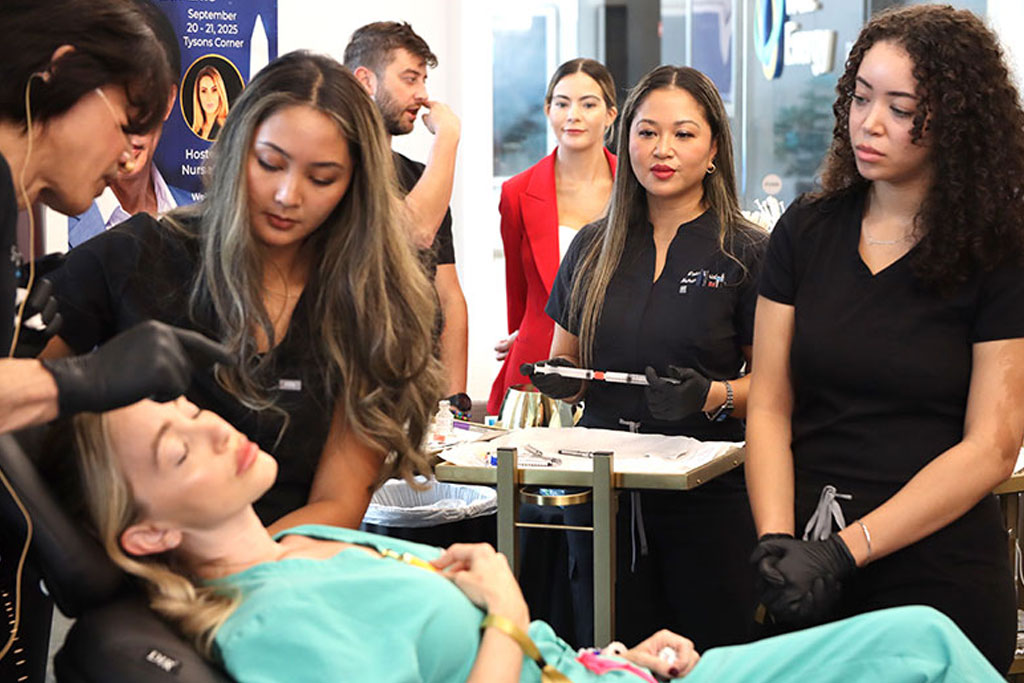
The bond between the bone, fat compartments, muscles, ligaments, and skin is respected to get natural results. Aging is a non-uniform process; it is associated with bone resorption, redistribution of fat, muscular activities as well as laxity of ligaments, all of which differ depending on the region and the individual. Having no idea about these layers injectors can add a lot of unnecessary volume or as well as can make the muscles weaker without paying attention to what is happening. Anatomy training through cadavers enables practitioners to learn more effectively the real tissue structures in the cadaver producing a three dimensional understanding that will lead to more considered and restrained treatment planning.
The Transformation of Cadaver Training Injection Strategy
Among the greatest advantages of using cadavers training is the ability to know where volume is really required and where it is not. Through visualization of the fats compartments and demarcation, injectors are able to understand why overfilling some areas like the tear troughs, lips or nasolabial folds results in captured weight and distortion. Cadaver dissection can also answer the question of muscle depth and muscle orientation enabling practitioners to locate neurotoxins accurately so as to relax the muscle without removing expression. This anatomical specificity moves injectors off of trend-based treatments and onto the path of structure-based and individualized correction.
Precision Over Product
Natural aesthetic outcome is not attained by the more product or higher doses, rather they are more accurate. The training based on anatomy underlines the significance of proper depth, plane as well as placement. Injectors with knowledge of vascular pathways, ligamentous support and muscular dynamics are in a better position to develop minute improvements which harmonise with the natural features of a patient. This accuracy minimises the chances of migration, asymmetry and exaggerated lines that many people would refer to as an overdone look.
Savings Expression and Identity
Facial identity is one of the least considered issues of aesthetic treatment. Excessive treatment tends to kill the original features that make a face recognizable and expressive. Anatomy-driven training helps the injectors learn to balance relaxation of the muscle and functioning and retaining natural movement and softening the undesirable lines. By honoring the way that muscles interact and provide assistance in expression, the practitioner can prevent the stiff, mask-like appearance that the patients dread.
Conclusion
They are not a coincidence, and thus natural-looking results. They are obtained by a thorough grasp of the anatomy of the face and by an art of putting that knowledge deep rooted into practice. Cadaver training and anatomy based training gives injectors the means to get past formulaic treatments and into sophisticated individualized care. Focusing on anatomical accuracy and avoiding extravagance, the practitioners able to achieve the best results as they will improve patients without overwhelming them, preserving the aesthetic and patient confidence.